
Willpower Is For Fat People

Because getting in shape shouldn't suck

  • Home
  • Blog
    • Polls Archive
  • Undieting
    • You are not me
    • How to lie with science
    • Are you steam powered?
    • Eating is not a sport
    • You are NOT what you eat
    • Eat consciously — except when you don’t
    • Diets don’t burn fat, they burn money
  • About
    • About Me
  • Contact
  • Daily Weigh-in
  • Forum

Powered by Genesis

Protein is as dangerous as smoking?

By Drew

Photo by Matteo Catanese

Photo by Matteo Catanese

This article debunks the idea presented in a pair of studies that a “high protein diet” — in particular protein from animal sources — would cause cancer.

http://examine.com/blog/high-protein-diets-linked-to-cancer-should-you-be-concerned/

Highlights

  • “Does exercise exert a protective effect?” – this study did not measure exercise.
  • “What about sources of protein?” – this study did not measure anything beyond whether it came from an animal or plant. Chicken breast is not comparable to processed bologna meat.
  • “Do these results apply to persons younger than 50?” – we don’t know
  • “What about eating your veggies and fruits?” – vegetable and fruit servings were not counted, just carbohydrates and fats.
  • “What did they eat in place of protein in the low protein group?” – protein as a percent of caloric intake was assessed, but not levels of carbs or fats (beyond group averages before division into thirds for analysis), so we don’t know if the macronutrient used to replace protein had a protective effect or not.
  • “Fast food versus home cooked?” – not measured.
  • “Could a healthy lifestyle completely circumvent these effects?” – perhaps, but the study never looked into ‘a healthy lifestyle’ beyond macronutrients
  • “What about weight loss?” – the study controlled for ‘attempted weight loss’, so it would be prudent to assume that no significant weight loss occurred in most subjects. Due to this, any questions pertaining to whether weight loss exerted a protective effect (usually does in other studies, if the weight loss occurs in obese persons) cannot be answered by this study.

Study referenced

Low Protein Intake Is Associated with a Major Reduction in IGF-1, Cancer, and Overall Mortality in the 65 and Younger but Not Older Population

By Drew

http://www.cell.com/cell-metabolism/abstract/S1550-4131%2814%2900062-X

Highlights (from the study)

  • High protein intake is linked to increased cancer, diabetes, and overall mortality
  • High IGF-1 levels increased the relationship between mortality and high protein
  • Higher protein consumption may be protective for older adults
  • Plant-derived proteins are associated with lower mortality than animal-derived proteins

Relevant talking points

  • Observational studies can’t prove anything
    • Correlation is not causation
    • Food recall surveys are unreliable
  • Sensational headlines are sexy
  • Statistics are hard
  • What is that supposed to mean?

Analysis

  • Protein is as dangerous as smoking?

Correlation is not causation

By Drew

Photo by Centophobia

Photo by Centophobia

Where there’s smoke there’s fire.

What if there’s an electrical short?

Okay, that’s an exception. But usually where there’s smoke there’s fire.

How about a chemical reaction that produces smoke without fire?

Sure, fine, but most of the time where there’s …

How about …

Okay, I get it! There’s lots of reasons for there to be smoke without fire. What’s your point? [Read more…]

Observational studies can’t prove anything

By Drew

Photo by  Eric Schmuttenmaer

Photo by Eric Schmuttenmaer

“What happened?”

Seems like a simple question, right? But when you’re talking about observational studies what they’re really asking is, “Why did that happen?” And that’s much harder.
[Read more…]

Learn to Cook

Real men know how to cook.

Real men know how to cook.

Why?

  • What’s the only room in the house where your wife will let you play with power tools?
  • Did you know “getting ready for dinner” can include the use of a butane torch?
  • Aren’t you embarrassed that the only way you can feed yourself or your family is to take something from the freezer to the microwave?

If your head is stuck in tenth grade where people made fun of the guy who took cooking class instead of auto shop, it’s time to grow up. There’s nothing wrong with being able to feed yourself. In fact, I’d be embarrassed if I couldn’t.

I’m not talking about fancy cakes and sauces with forty-two ingredients. I mean the basics:

  • Pot roast
  • Baked chicken
  • Pork chops
  • Baked potatoes
  • Green beans

None of this stuff is hard. And it doesn’t have to take much time, either. If you’ve got a stove, a pot, a frying pan and a knife you can eat better at home than at most restaurants.

Stop (over)paying for mediocre food. Man up and learn to feed yourself.

Food recall surveys are unreliable

By Drew

Photo by Tambako the Jaguar

Photo by Tambako the Jaguar

What did you have for dinner on the third Thursday of the month, two months ago?

Unless it was your birthday, I’ll bet you don’t remember.

Now what did you have for dinner every day two months ago? [Read more…]

Willpower is for fat people

LogoNo, that doesn’t mean if you have a weight problem you just need a little self-control.

Being overweight isn’t a character flaw. The idea that you can control your weight with willpower is actually how you get fat and why you stay that way.

Here’s how that works.

You don’t need any willpower to eat whatever you like whenever you feel like it. But just try not eating whatever’s in front of you when you get hungry enough.

So willpower only matters when you’re really hungry.

Now look at the popular diets on TV and in the magazines. They’re mostly telling you the same thing: Don’t eat anything you like. And while you’re at it, don’t eat much of anything else, either.

That’s guaranteed to make you hungry. All. The. Time.

But it seems like everyone’s telling you that’s what you have to do if you want to lose weight. So you try it. And it works … for a little while, anyway.

Photo by butterbits

Photo by butterbits

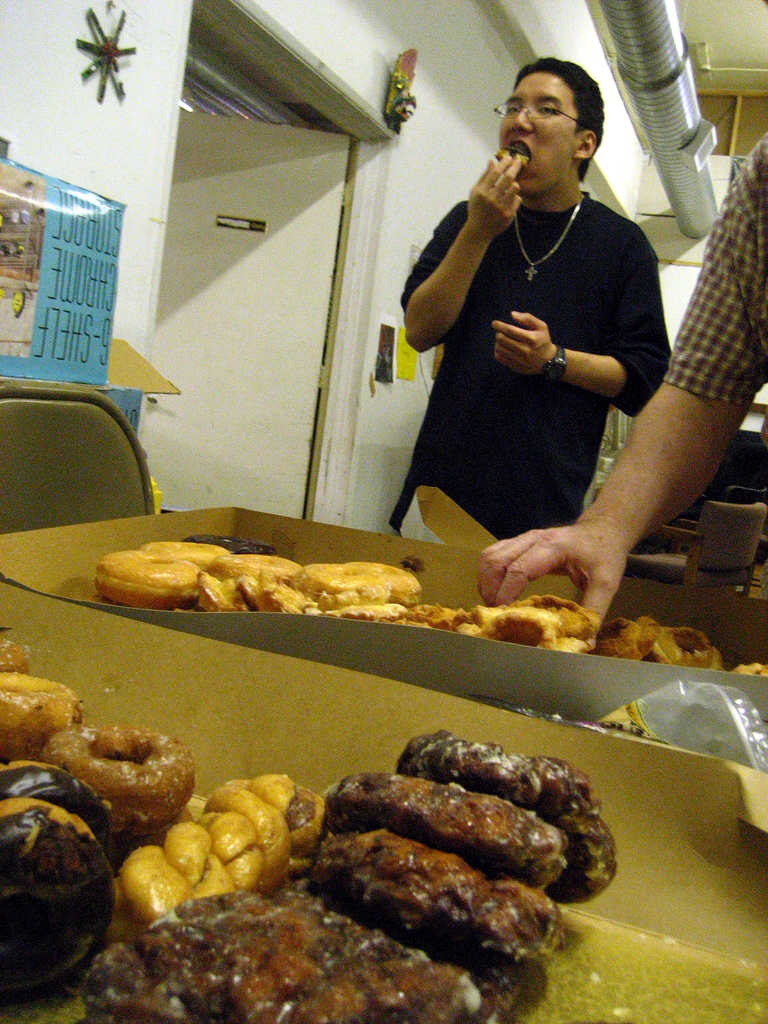
Then you hit a plateau, and it’s been two, three, maybe even four weeks since the last time you lost any weight. Then just when you’re starting to wonder why you’re putting yourself through all this, you show up at a meeting and someone brought bagels and donuts and you lose all control.

If that sounds familiar, the thing you need to understand is that nine out of ten people who go on a diet to lose weight eventually go off that diet. And when they do, they usually gain back all the weight they lost, if not more. So dieting is usually just a way to put off being fat until later instead of right now.

So why do we keep doing it?

Because we start dieting in public but give up all alone. Let me explain what that means.

If someone were giving out directions for how to get to the hospital, and nine out of ten people who followed those directions ended up at the library instead, they’d all see each-other in the parking lot and realize, “Those directions suck. That guy doesn’t know what he’s talking about.”

Photo by pinguino k

Photo by pinguino k

Then they’d ask somebody else. And if they got the same directions, they’d keep asking until they found somebody with different directions.

But when you go head-first into the donut tray, you don’t see a bunch of people looking back at you wondering how they ended up with glaze all over their faces just like you, so you think you’re the only one. That you’re a failure. That if you just tried harder you could make dieting work.

But dieting doesn’t work.

And you know it. And if you ask your friends who’ve tried every diet that comes along and it’s always failed, they know it too.

So maybe, instead of listening to another so-called expert telling you to just try harder to follow the same old directions that have never gotten you where you want to go … maybe it’s time to go a different direction instead.

How to read a news story about nutrition

By Drew

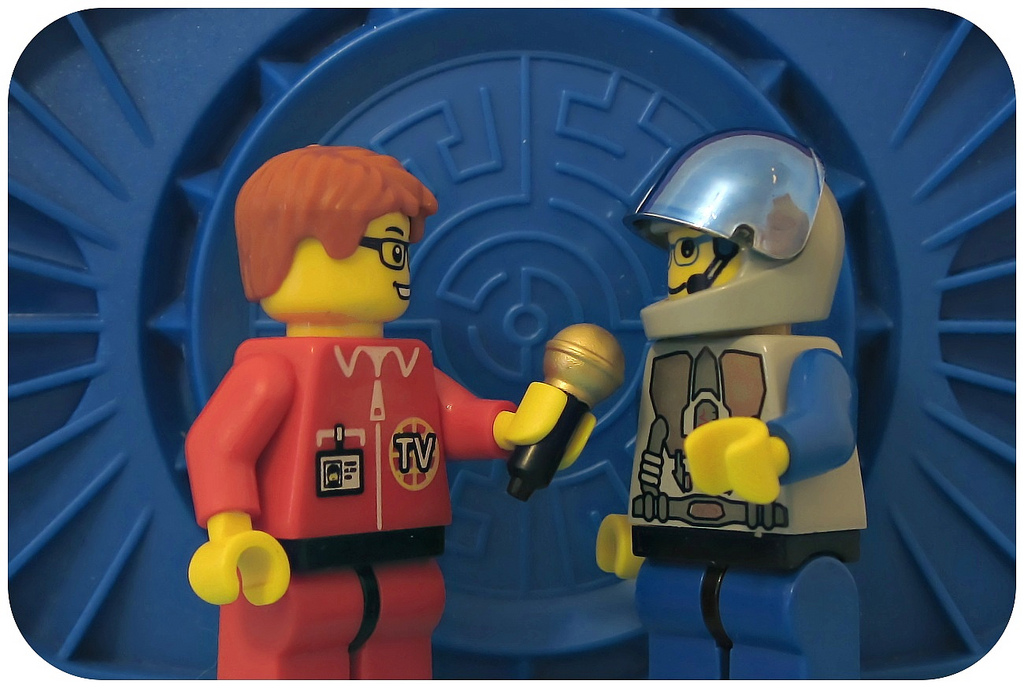
The Interview

Photo by Pascal

Have you ever seen a news report about something you already know about? If you have, I can pretty much guarantee you thought, “Wow, that reporter doesn’t know anything about this.” Think about it a bit and you realize that’s probably true of all the stories you don’t already know about, too.

For most reporters, the qualifications have more to do with speaking and writing well than knowing anything about a specific topic. (Having good hair helps, too.) This makes sense when you realize the reporter was covering a chemical spill yesterday and a lawsuit over cell phone towers today. What are the odds that reporter is an expert in chemistry, telecommunications and constitutional law?

That’s what I say when I’m being nice to them. The other problem is that news organizations care more about ratings than accuracy. A flashy, controversial story that takes 30 minutes to write, with a juicy headline, always beats a well-researched analysis of a complex subject that takes 2 weeks to write and most people won’t read anyway.

Put it all together and what do you get?

Good science is just about the most boring stuff in the world to read about. Even the people doing the work will admit how tedious it is. I know a guy who was on his way to a Ph.D. in biology when he started having panic attacks from the sheer mindless boredom of it.

But reading the abstract from a study, ignoring the paragraph about limitations in the design, skimming the statistical analysis (because really, who takes math when you’re majoring in communications?), misinterpreting the conclusions, and wrapping it up with a doom-and-gloom headline? Well hell, anyone can do that!

Here’s an example.

CNN published an article based on a study analyzing coronary plaque buildup and egg consumption.

Study title: Egg yolk consumption and carotid plaque

Story title: Is eating egg yolks as bad as smoking?

And we’re off to a good start. Shouldn’t the news be answering the question instead of asking it? If the reporter — or editor — believes the answer is settled, then the headline should report that answer. Unless … this is really just a press release. How can we tell?

The first sign is that nearly the entire “article” is quoting from the study or its author. There is a single quote near the end from an expert, but the quote refers to basic dietary guidelines and has nothing at all to do with the study.

Ignoring the fact that this is basically a press release, there’s also the problem of reporters not understanding statistics. Most important — because this is the one they virtually always ignore when reporting on nutrition — is the difference between causation and association.

causation
Matches cause fires.
association
Fire alarms are associated with fires.

In other words, even though you frequently hear alarms when there are fires, it would be wrong to say the alarms cause the fires. But that’s exactly what CNN does when they say in the photo caption:

Eating egg yolks regularly increases plaque buildup about two-thirds as much as smoking does, according to a new study.

No. What the study said was that carotid plaque area is higher in people who report eating the most eggs. That’s association. The study says clearly in the interpretation section:

This hypothesis should be tested in a prospective study …

That’s the study’s authors saying that this type of study, where they asked people after-the-fact what they had done and try find associations, is only good for identifying interesting questions. To show that doing this causes that, you have to start with at least two groups of test subjects, and make one of them change something — eat more eggs, eat fewer eggs — and see what happens. This is called a randomized controlled trial or RCT.

The problem with RCTs is that they take years to conduct, they’re incredibly expensive, and unless someone has thought of a way to make a ton of money off the results, no one has any incentive to spend that time and money.

So you can never trust what you read online, or see on TV?

Let’s see, how can I put this … Where have you been for the last 40 years?!

Motorcycle Lesson

Photo by Matthias Weinberger

When I was 16 my father taught me to ride a motorcycle. He told me, “Always act as though half the drivers out there don’t even see you, and the rest are trying to run you down.”

It works with nutrition reporting, too. Half the time the reporter doesn’t know the first thing about what he’s reporting on, and the rest of the time someone’s probably trying to sell you something.

Should you eat the whole egg?

By Drew

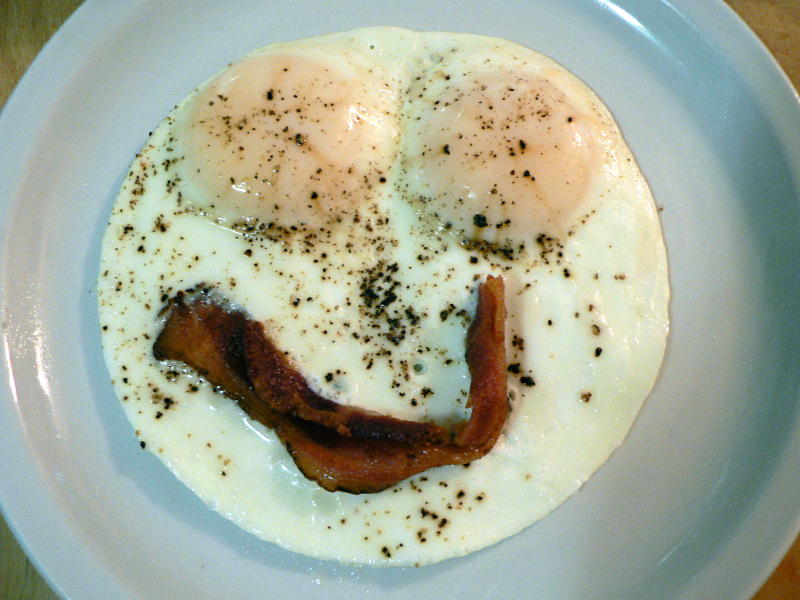
Happy Breakfast

In the past 50 years eggs have gone from an indispensable part of the human diet to the leading cause of heart attack and back again as many times as there have been reporters with a deadline and nothing solid to report. Sometimes it’s the whole egg, sometimes just the yolk that gets thrown under the bus.

There have been some actual studies of egg consumption, but as likely as not what you’ll see is someone focusing on one nutrient in the egg — usually cholesterol or fat — and saying that’s the reason eggs are so bad for you. Most of these claims are getting the science completely wrong, but it would help to start out with understanding what’s actually in both parts of an egg.
[Read more…]

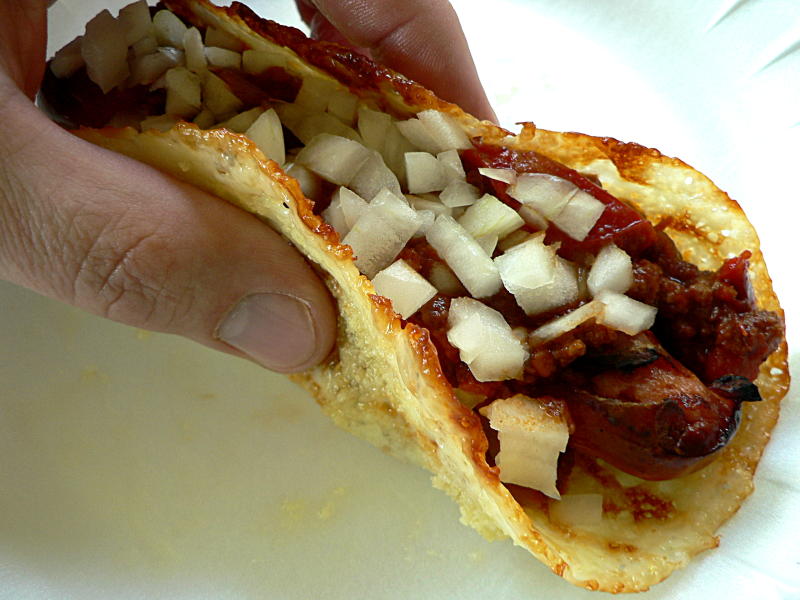
Chili Cheese Dog Wraps

By Drew

Sometimes you have a craving for something from your childhood. Usually that ends in sadness as you realize it wasn’t as good as you remember. But sometimes you can make it better.
[Read more…]

« Previous Page
Next Page »

Recent Posts

  • Willpower is your goalie
  • I know, let’s blame your parents!
  • You can’t “add healthy” to junk
  • Don’t you just love how horrible this is?
  • Anybody want a cookie?

Recent Comments

  • Drew on I know, let’s blame your parents!
  • Murphy Kismet on I know, let’s blame your parents!
  • Drew on Anybody want a cookie?
  • June on Anybody want a cookie?
  • AHA wants you to kill yourself - Willpower Is For Fat People on What is that supposed to mean?